
Thieves Like Us
Finders Keepers

Ordinary Outlaws
Thieves Like Us is an ideologically loaded phrase. It collapses the divide between criminal and citizen. Under different circumstances we (citizens) might be among them (criminals). The criminologists tell us that some criminal behaviour is deviant, but a lot is socially conditioned1. Any one of us could be a thief, if exposed to the right combination of social factors.
The difference between criminal and citizen is thinner than we may like to admit. Edward Anderson wrote the book Thieves Like Us in 1937. Robert Altman adapted the novel in 1974. The book is about various characters’ tragic lives shaped by limited choices.
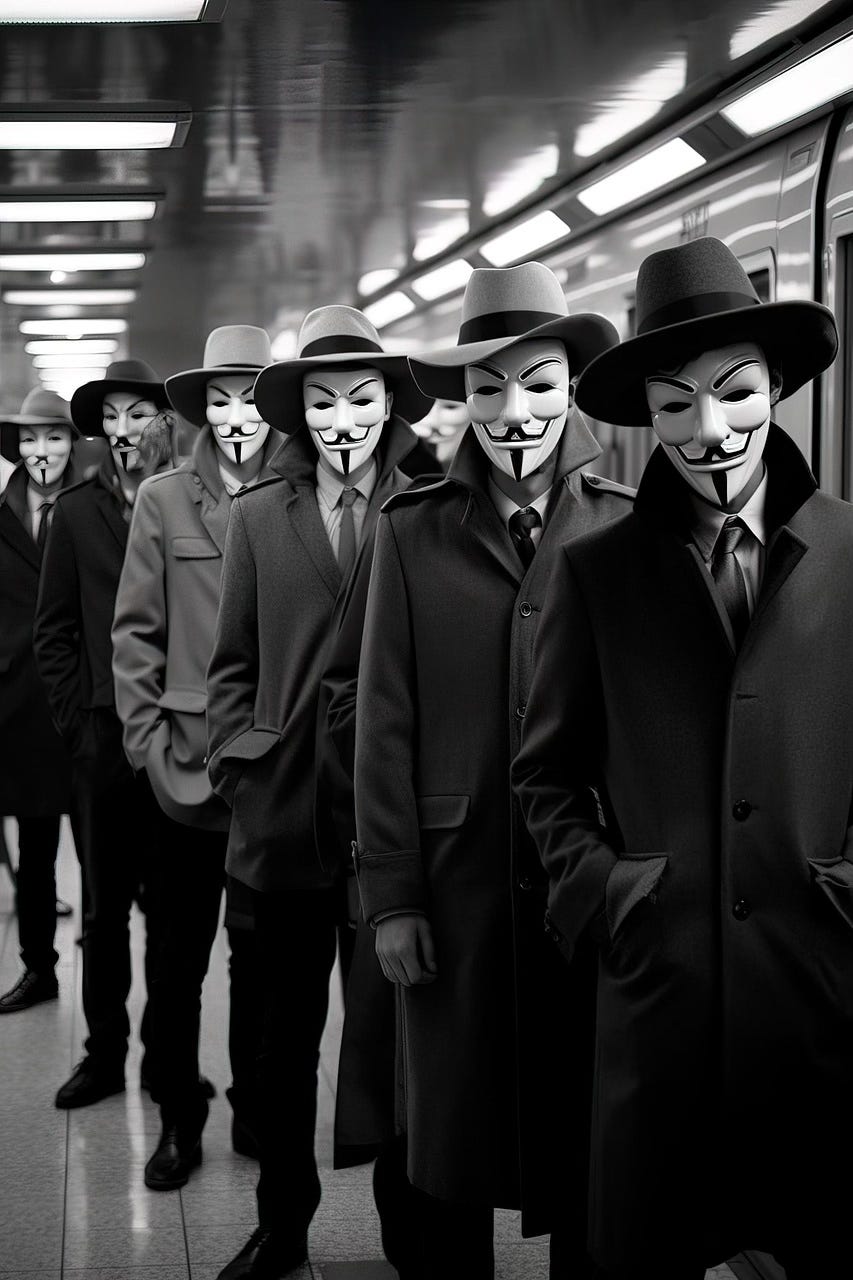
Fig 1. Spot the Thief
Thieves Like Us is set in the Great Depression. The characters survive through petty crime. Anderson’s characters are criminals with disordered lives. He does not excuse them, but let’s them dream of stability as they move from one robbery to the next.
Altman’s film uses overlapping dialogue and ambient sound to remind us that they operate in a broader world. The radio broadcasts indicate a society continuing as normal, indifferent to life at the margins.
The Grapes of Wrath, set at the same time, contains characters who respond to economic pressure by migration and endurance. The Joads are harassed by police, labelled Okies2 and treated as a threat simply for moving and seeking work.
Crime is framed as a socially conditioned mode of existence. There exists plenty of crime in nature. The cuckoo is a rampant fraudster tricking other birds into raising its young. However, as far as we know, the cuckoo does not understand fraud or feel guilt.
🎸🎸🎸Thieves Like Us - New Order 🎸🎸🎸
This weeks music video is Thieves Like Us3 by New Order, overlaid on a montage from The Last Days of Disco. I find this quite nostalgic. Nightclubs before social media. Flirting codes. Party Fears. Analogue dating and dancing. The whole Darwinian mashup.
Bernard Sumner has confirmed4 that the title was inspired by the Anderson novel. He didn’t give a literary explanation of every line. The song borrows the film’s title but the lyrics are not meant to match the movie’s plot. Instead, the title serves as a mood or emotional frame. Here, the Outlaw condition is emotional rather than legal.
It belongs to everyone but us
In The Last Days of Disco, the stakes are lower, but the mechanism is the same. The characters are anxious about social legitimacy. Entry to the disco, romantic attention, and intellectual recognition function like currencies. The fear is invisibility.
Like the speaker in New Order’s Thieves Like Us, these characters feel they are watching life rather than living it. Analysing love instead of experiencing it. Accent, taste, and conversation replace money as markers of worth. A wrong remark or misjudged opinion could lead to social exile.
The opening lines establish a mood of exhaustion, suggesting extended observation bordering on fatigue. The attention is forensic rather than affectionate, studying cracks and wrinkles:
I’ve watched your face for a long time
It’s always the same
Thieves Like Us is not a love song in any conventional sense. It is a song about the gap between what love is supposed to be and how it feels filtered through alienation. The repeated chants love, love, love, love near the end empties the word via excess.
This mirrors the experience of Anderson’s characters, whose romantic relationships promise an escape from crime. But they never achieve stability. In the novel, love represents the fragile hope of a life beyond theft.
On the 12” version there is an extra verse about an intense life featuring hardship, exhilaration, risk, pain and self-medication. Then an adapted chorus. After instability, addiction and excess the speaker asserts that love is the stable foundation to any life. Love has its own logic:
I’ve lived my life on alcohol
I’ve lived my life on pills
…
But it’s called love
And it belongs to us
…
And it’s the only thing that’s worth living for
Then comes this knockout lyric: Love is the air that supports the eagle! Eagles symbolise power, nations, empires. Air is invisible, taken for granted, essential but unnoticed. It is not yet owned or controlled.
Love is the air that supports the eagle
No matter how strong or elevated it seems, the eagle can only fly because something invisible sustains it. In this metaphor love is the condition of possibility. The unseen medium that allows romance and passion.
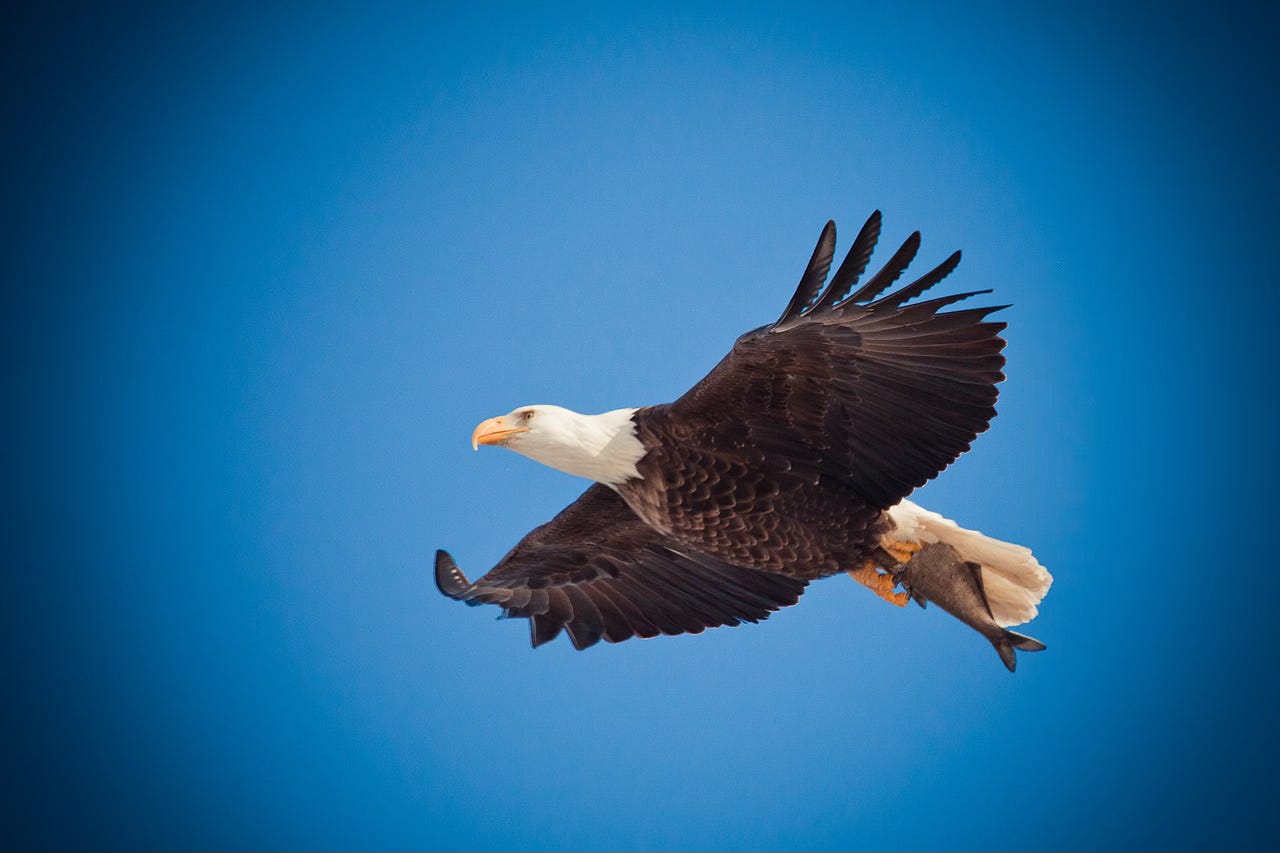
Fig 2. Look At Me, Mama!
The song closes with It’s Called Love And Belongs To Everyone But Us. The tragedy in Thieves Like Us is that the speaker feels cut off from this sustaining medium. The speaker is an emotional outsider, watching love circulate while remaining alone. Just as Anderson’s characters observe homes, stability, and routine from the margins - so the song’s speaker observes love as a concept that belongs to others. In both cases, desire is sharpened by proximity without access.
🐇🐇🐇 || Follow Your Rabbit || Feed Your Mind || Find Your Beach Under Your Pavement || Be The Air: Support Your Eagles || Thanks for Reading || 🐇🐇🐇
Some theories see theft as deviant, e.g. Durkheim. He would say that some people choose to steal after weighing risks and rewards. Eric Berne saw it as playing out a life script, which he documented in the Cops & Robbers game. However, most modern criminologists argue that theft is conditioned through unstable environments, living in poverty and / or learned when exposed to pro-crime norms, especially from peers.
Okie was a label for migrant workers from Oklahoma. It became derogatory in the 1930s when casual labour surged westward.
Thieves Like Us was released on Factory Records as a single FAC 103 in April 1984. It peaked at #18 off UK Charts, and #1 of the new Indie Charts. On Substance and later compilations. Full Lyrics:
I’ve watched your face for a long time
It’s always the same
I’ve studied the cracks and the wrinkles
You were always so vain
Well, now you live your life like a shadow
In the pouring rain
Oh, it’s called love
Yes, it’s called love
Oh, it’s called love
And it belongs to us
Oh, it dies so quickly
It grows so slowly
But when it dies, it dies for good
It’s called love
And it belongs to everyone but us
Extra Verse & Adapted Chorus: 12” Only
I’ve lived my life in the valleys
I′ve lived my life on the hills
I’ve lived my life on alcohol
I′ve lived my life on pills
But it’s called love
And it belongs to us
It′s called love
And it’s the only thing that’s worth living for
It′s called love
And it belongs to us
It′s called love
Yes, it’s called love
Oh, love is found in the east and west
When love is at home, it’s the best
Love is the cure for every evil
Love is the air that supports the eagle
But it’s called love
And it’s so uncool
It’s called love
And somehow, it’s become unmentionable
It’s called love
And it belongs to every one of us
It’s called love
And it cuts your life like a broken knife
Oh, love
Love, love, love, love
It’s called love
And it belongs to us
It’s called love
Love, love, love, love
It’s called love
And it belongs to everyone but us
John “Jellybean” Benitez has confirmed that Bernard based the title on the book.
Another thought provoking one for 2026
Eagles 🦅